How to Banish Mould from Your Curtains and Blinds in No Time!

Moulding on curtains and blinds can be a real nuisance, not to mention unhealthy for your home. Whether it’s caused by damp weather, high humidity, or a forgotten spill, mould can quickly spread and ruin your window treatments.
Don’t worry! Removing mould is easier than you think. In this guide, we’ll show you simple, effective methods to get your curtains and blinds looking fresh again.
Say goodbye to mould and hello to a cleaner, healthier home in just a few easy steps!
Why Mould Forms on Curtains and Blinds

Mould thrives in damp, humid environments, and certain factors can contribute to its growth on curtains and blinds. Here are some common causes:
- High humidity: Mould thrives in areas with elevated moisture levels, particularly in environments like kitchens and bathrooms where humidity is often higher.
- Water exposure: Spills, leaks, or condensation on curtains or blinds create ideal conditions for mould to develop.
- Poor ventilation: Rooms with limited airflow, such as those with closed windows or blocked vents, trap moisture and promote mould growth on window coverings.
- Dirty curtains or blinds: Dust and dirt on curtains or blinds can retain moisture, providing a suitable environment for mould to grow.
- Inadequate cleaning: If curtains and blinds are not cleaned or maintained regularly, accumulated dust, moisture, and dirt can lead to mould build-up over time.
Essential Tools and Products for Mould Removal

To effectively remove mould from curtains and blinds, you’ll need the following essential tools and products:
- Mould remover: Use a store-bought mould remover or a natural solution like vinegar or baking soda to eliminate mould growth.
- Soft brush or cloth: A gentle brush or cloth will help scrub and remove mould without damaging the fabric or surface of the curtains and blinds.
- Baking soda: Create a natural paste with baking soda to tackle stubborn mould spots.
- White vinegar: This powerful natural cleaner kills mould and neutralizes odours, making it an excellent choice for cleaning.
- Detergent: A mild laundry detergent will help in washing the curtains after mould removal, ensuring they are thoroughly cleaned.
- Rubber gloves: Protect your hands from mould spores by wearing rubber gloves during the cleaning process.
- Vacuum with brush attachment: Before starting the cleaning process, use a vacuum with a brush attachment to remove dust and debris from the curtains and blinds.
Step-by-Step Guide to Removing Mould from Curtains

Mould on curtains can be unsightly and damaging, but with the right approach, you can restore your curtains to their former condition. Follow these simple steps to safely remove mould and keep your curtains fresh and clean.
Step 1: Preparing the Curtains for Cleaning
Before you begin cleaning, it’s important to remove the curtains from the rod and check for any loose dirt or debris.
Vacuum the curtains with a soft brush attachment to get rid of any dust and particles. This step helps prevent spreading the of mould during the cleaning process.
Inspect the curtains for areas with heavy mould build-up, paying attention to seams and folds, as these are often where mould likes to hide.
Prepare a well-ventilated area for cleaning, such as an outdoor space, to allow moisture to evaporate more easily. If the fabric is delicate, check the care label for any specific instructions on washing or treatment. Once you’ve prepared your curtains, you’re ready to move on to the cleaning process.
Step 2: Use a Mould Remover or Natural Solution (e.g., vinegar, baking soda)
For removing mould from curtains, you can either use a store-bought mould remover or make your natural solution.
Vinegar and baking soda are both effective, natural options for tackling mould. For the vinegar solution, mix equal parts water and white vinegar in a spray bottle and apply it to the affected areas.
Vinegar kills mould spores and neutralises the smell. If you prefer using baking soda, mix it with water to form a paste and apply it to the mould spots. Let the solution sit for 15-20 minutes, allowing it to penetrate and lift the mould.
Use a soft brush to scrub the areas gently, ensuring not to damage the fabric. After scrubbing, rinse the curtains thoroughly with water to remove the solution. Both methods are effective and safe for most curtain fabrics.
Step 3: Washing and Drying the Curtains

Once you’ve applied the mould remover or natural solution, it’s time to wash the curtains. Check the care label for washing instructions. If the curtains are machine washable, wash them using the hottest water setting that is safe for the fabric.
Adding a small amount of detergent can help to remove any lingering mould spores. If the curtains are not machine washable, soak them in a large basin with warm water and detergent for about 30 minutes, then rinse thoroughly.
After washing, make sure to dry the curtains properly. Hang them outside in direct sunlight to allow the sun to naturally kill any remaining mould spores and prevent new mould from growing.
Avoid drying them in damp, dark areas, as this can encourage mould to return. Once the curtains are completely dry, iron them if needed to restore their shape.
How to Clean Mould off Blinds

Cleaning mould off blinds is a bit different from cleaning curtains, but the process is still fairly simple.
Step 1: Preparing the Blinds for Cleaning
Start by removing any dust or loose dirt from the blinds. Use a vacuum with a brush attachment to gently clean both sides of the blinds. If you can, take the blinds down for easier access, especially if they are heavily moulded.
For larger blinds, consider placing a towel or cloth underneath to catch any drips from the cleaning solution. For wooden blinds, avoid soaking them, as excess moisture can cause warping.
Ensure you have a well-lit and ventilated area to clean the blinds, so you can see the mould clearly and dry them effectively. Note, that you can’t use a washing machine to wash blinds.
Step 2: Using Cleaning Solutions (e.g., vinegar solution, specialised mould cleaner)
For blinds, a vinegar solution or specialised mould cleaner can work wonders. Mix one part white vinegar with three parts water, or use a mould remover designed for hard surfaces.
Spray the solution generously onto the mouldy areas and let it sit for 10-15 minutes to break down the spores.
For stubborn mould, apply baking soda directly to the area, followed by vinegar. This creates a fizzing reaction that can help lift the mould from the surface.
Use a soft cloth or sponge to scrub the mould off the blinds, being careful not to damage the finish or slats. Rinse the blinds with clean water and wipe them dry with a towel.
Step 3: Wiping Down the Blinds

After the cleaning solution has had time to work, wipe down the blinds with a clean cloth to remove any remaining solution and mould.
For PVC like PVC Venetian blinds or plastic blinds, a microfiber cloth works best to prevent streaks. For fabric blinds, gently wipe with a damp cloth, being careful not to get them too wet. If the blinds are still damp, leave them to air dry in a well-ventilated area.
For wooden blinds, use a dry cloth to remove any moisture and prevent damage. It’s essential to ensure the blinds are completely dry before rehanging them.
Tips for Different Types of Blinds (PVC, Wooden, Fabric)
Each type of blind requires slightly different care. Here are some tips to ensure effective cleaning and you can do it without taking them down:
- PVC blinds: PVC blinds are very easy to clean and maintain. Use a vinegar-water solution or a specialised cleaner to wipe away mould and dirt. PVC is moisture-resistant, so it can handle cleaning well. Wipe the blinds down with a soft cloth, ensuring they dry quickly to prevent water spots.
- Wooden blinds: Wooden blinds require extra care, as excessive moisture can warp or damage the wood. Use a minimal amount of cleaning solution and avoid soaking the blinds. Wipe gently with a damp cloth, then immediately dry them to prevent any lingering moisture that could damage the wood over time.
- Fabric blinds: Fabric blinds should be cleaned gently to avoid damaging the material. Use mild detergent or a vinegar solution for effective cleaning. Avoid soaking the blinds completely, as this can weaken the fabric. Instead, spot clean or use a damp cloth to wipe away dirt and mould gently.
How to Identify Mould on Curtains and Blinds
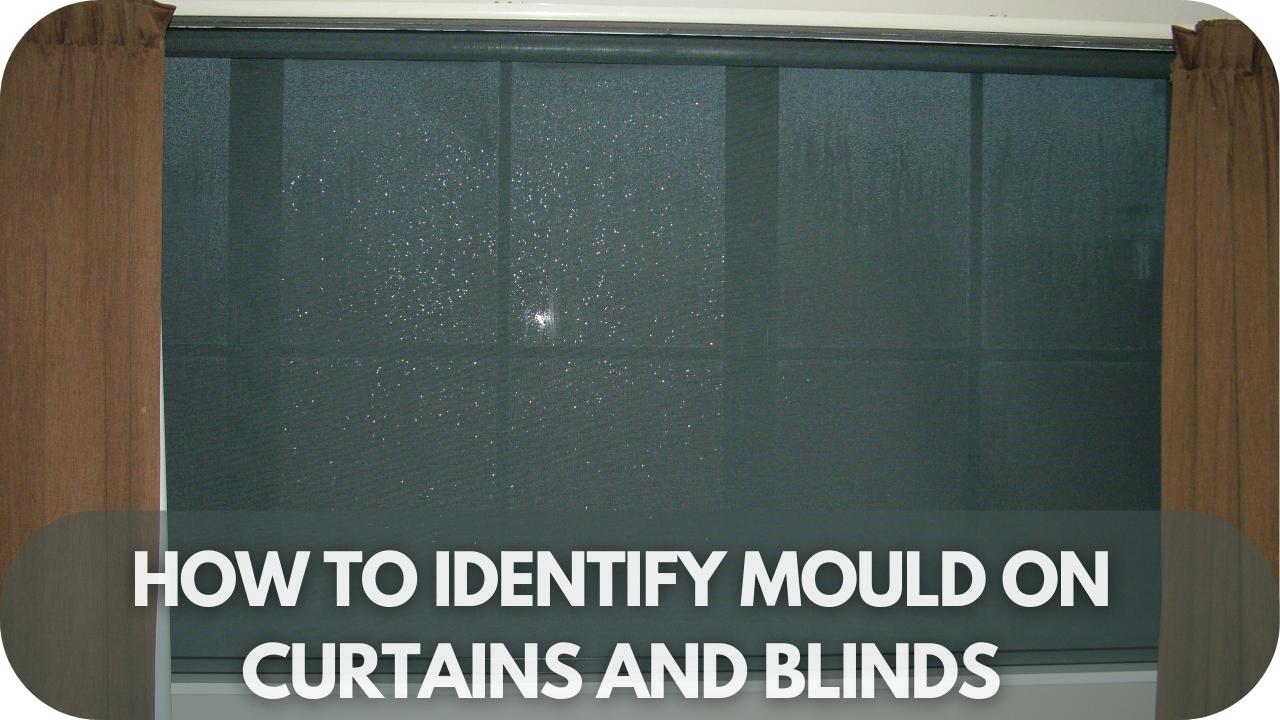
Identifying mould on curtains and blinds is crucial to maintaining a clean and healthy home. Mould often appears as dark spots or patches that can be green, black, or grey. These spots tend to spread if not addressed quickly, so regular inspection is important.
Even if visible spots aren’t present, a musty smell is a strong indicator of mould growth. It’s especially common around areas with high humidity or moisture, so pay close attention to places like window edges, seams, and folds. These areas trap moisture, making them the perfect breeding grounds for mould.
Look for any discolouration or areas darker than the fabric itself, as these are typically signs of mould. Wooden blinds or fabric blinds exposed to moisture or damp conditions are particularly vulnerable.
If you notice any of these signs, it’s essential to clean your curtains or blinds immediately to prevent the mould from spreading further.
Preventing Mould Build-Up on Curtains and Blinds

Struggling with mould on your curtains and blinds? Use the following tips to prevent it from moulding :
- Improve ventilation: Open windows regularly and use fans or dehumidifiers to reduce moisture in your home.
- Dry curtains after cleaning: Ensure your curtains are fully dry before rehanging them, especially in humid areas.
- Regular cleaning: Clean your curtains and blinds at least once every few months to remove any build-up of dust or moisture.
- Use mould-resistant fabrics: Some fabrics are treated to resist mould, which can be a good investment for homes prone to moisture.
- Control humidity: Use a dehumidifier in damp areas to maintain low humidity levels, which helps prevent mould.
- Check for leaks: Ensure there are no leaks around windows that may allow moisture to build up and create a mould-friendly environment.
When to Seek Professional Help for Mould Removal

If mould persists or has spread extensively on your curtains or blinds, it’s time to consider professional help. Here’s when to call in an expert:
- Extensive mould growth: When mould covers a large area of your curtains or blinds, a professional cleaning service is best equipped to handle the situation effectively.
- Health concerns: Mould can trigger respiratory issues, especially for those with allergies or sensitivities. If you experience health problems, hiring an expert is essential for safe removal.
- Unresolved stains or smells: If mould stains or the musty smell linger despite your cleaning efforts, professionals have stronger tools and treatments to address these persistent problems.
- Non-removable fabrics: Delicate or speciality fabrics may require professional cleaning to avoid damage. Experts use appropriate techniques to preserve the integrity of these materials.
- Deep-set mould: If mould has deeply infiltrated the fabric, regular cleaning methods may not suffice. Professionals have the expertise to tackle these tougher cases.
- Time constraints: If you lack the time or resources for a thorough cleaning, hiring a professional ensures effective mould removal without the hassle.
Conclusion
Removing mould from your curtains and blinds doesn’t have to be a hassle. With the right approach, you can restore them to their former glory and keep your home fresh and healthy.
If you’re looking for high-quality, mould-resistant window coverings, contact Into Blinds today for expert advice and solutions tailored to your needs!